On this page
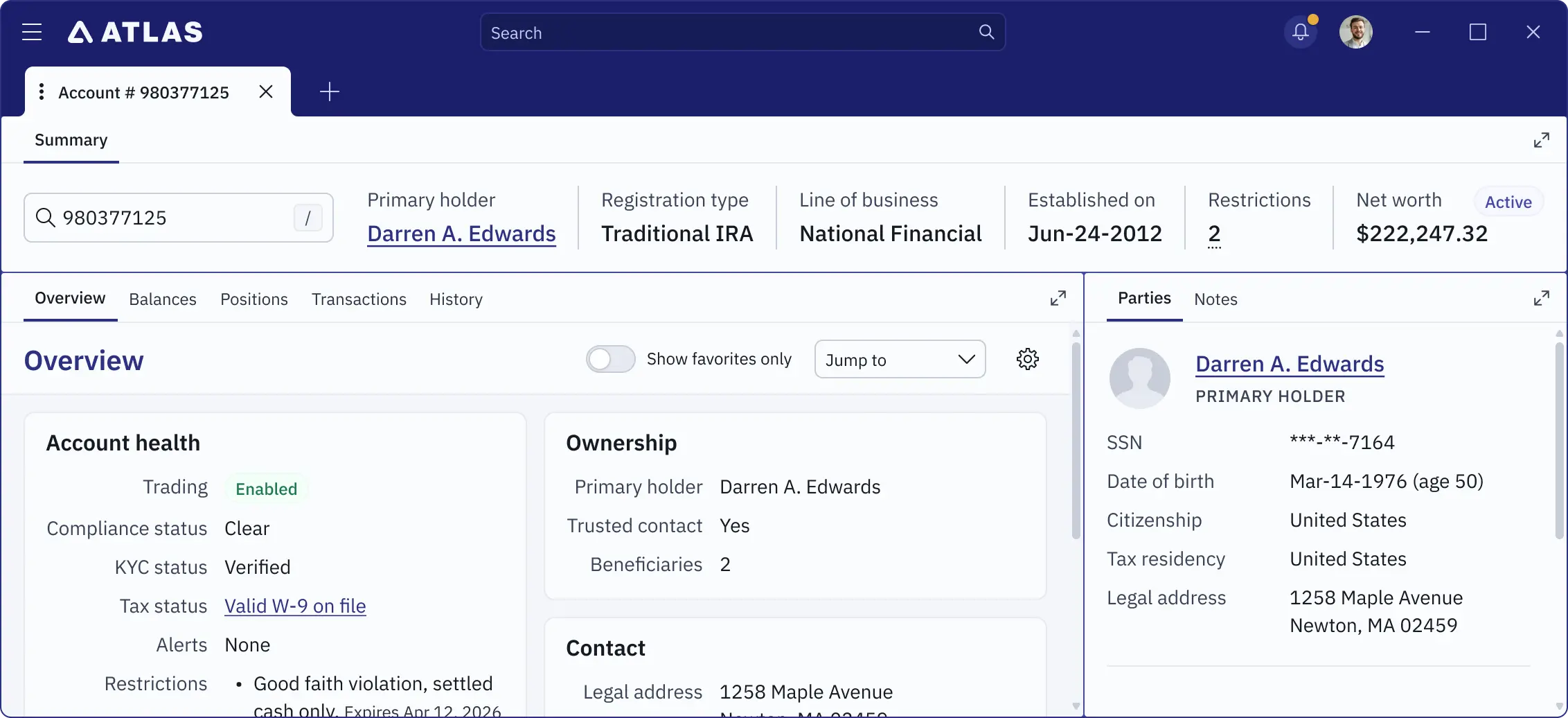
I led the end-to-end associate experience for a financial operations platform designed to modernize fragmented institutional workflows. The work brought together task management, account context, routing logic, and platform standards into a more unified experience, helping reduce average associate ramp-up time from 18 months to 1 month.
The story
A large financial services organization needed to modernize the internal platform used by thousands of associates supporting institutional wealth management, brokerage, clearing, custody, and trading operations.
The organization served a wide range of institutional clients, including broker-dealers, banks, trusts, registered investment advisors, and family offices. At enterprise scale, the platform supported millions of daily brokerage and trading activities.
A subset of institutional clients were also given direct access to a scoped-down version of the same platform, surfacing relevant task and account tools so they could engage with their own operational workflows directly rather than solely through associates.
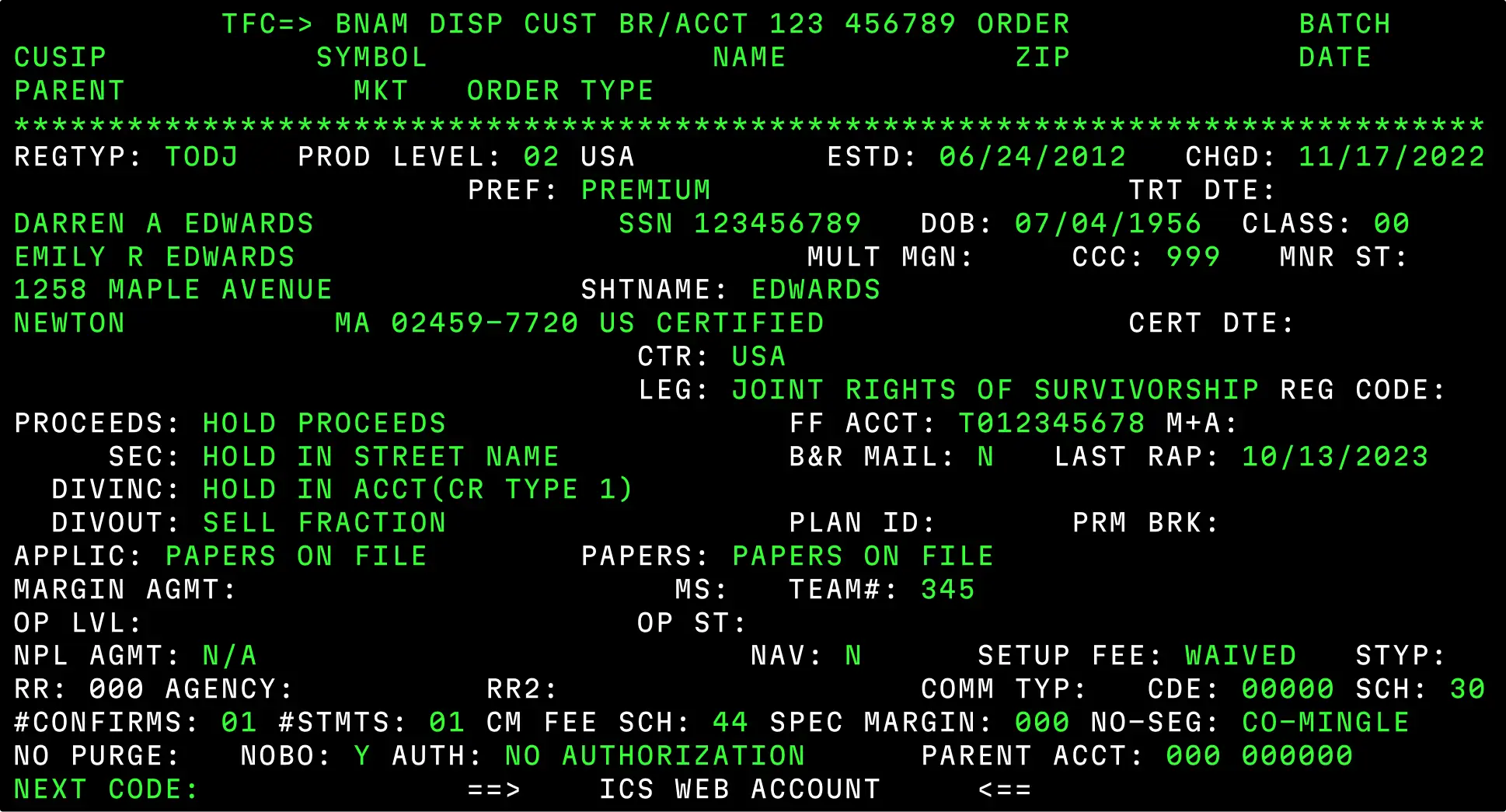
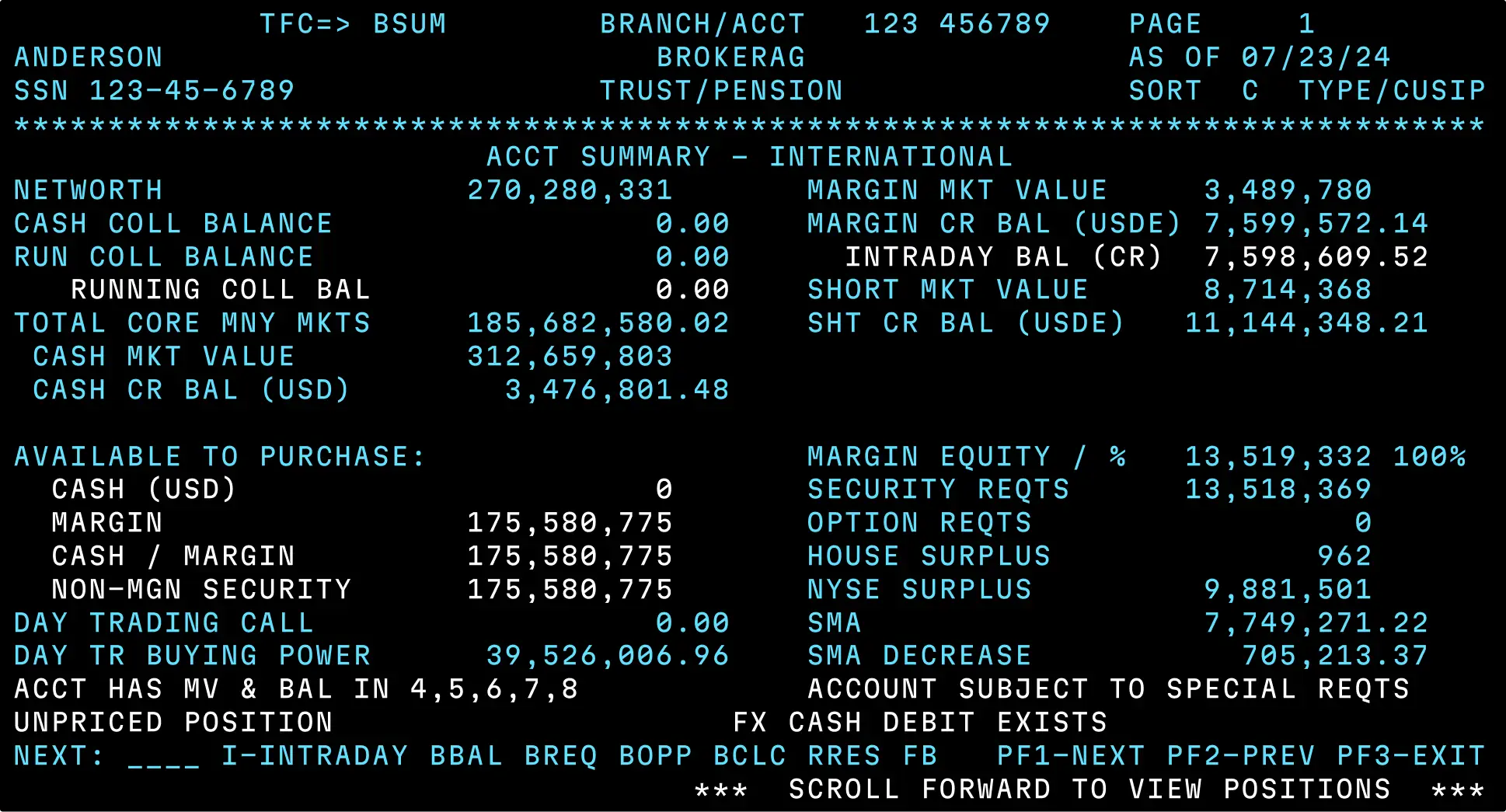
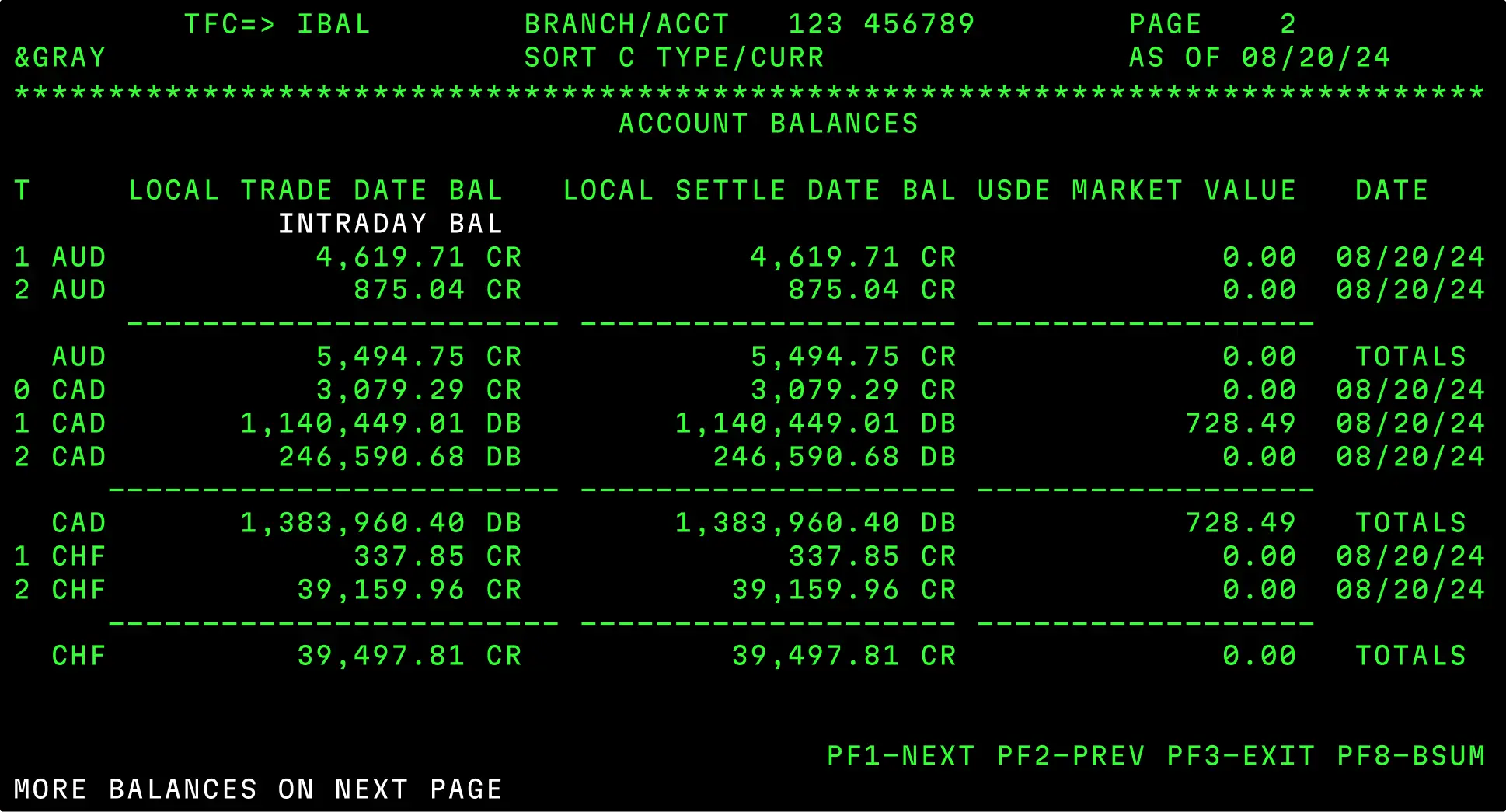
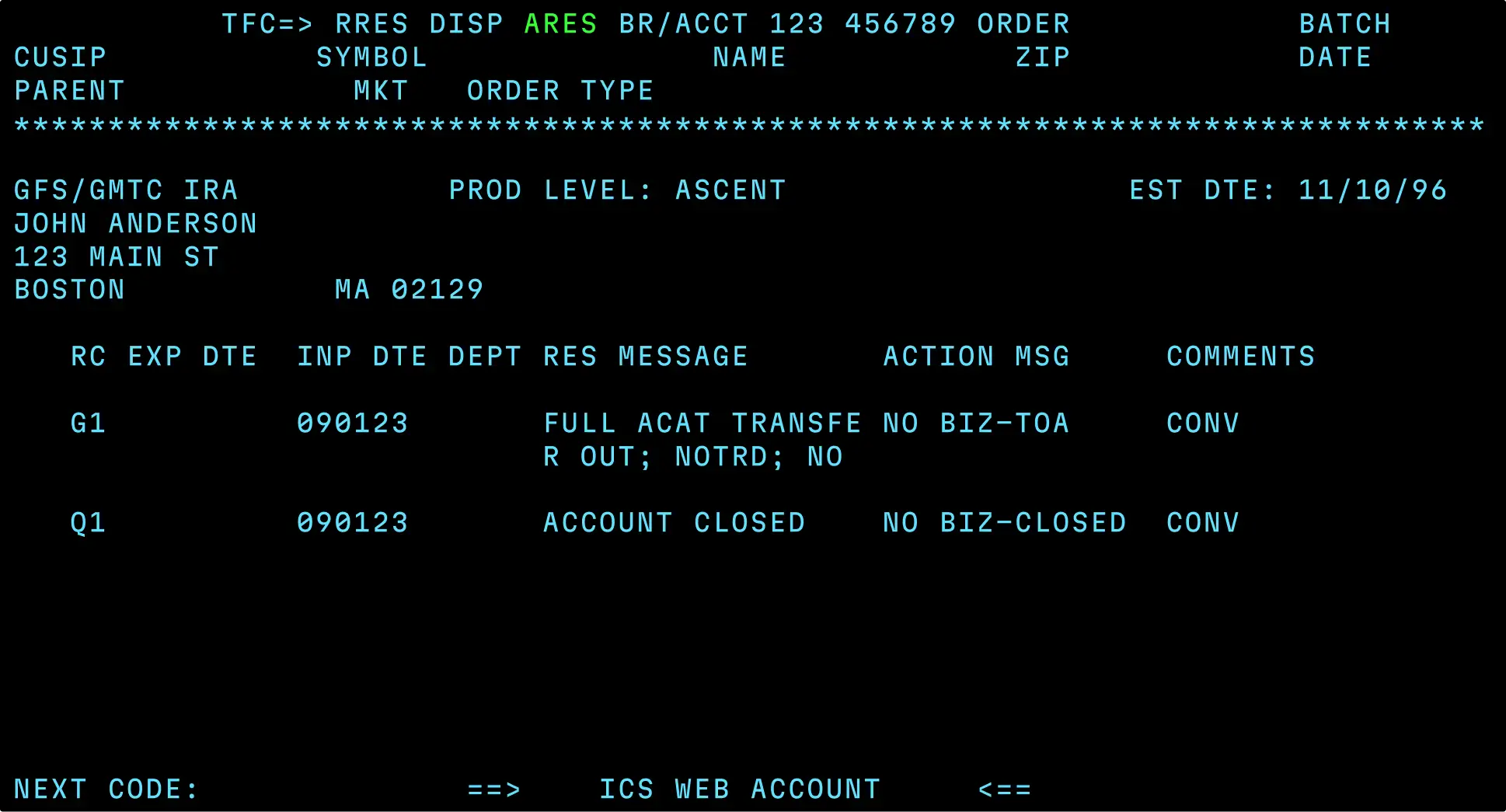
But the associate experience had become fragmented. Capabilities were spread across many legacy systems, interfaces were inconsistent, and tools often did not communicate with one another.
Associates had to move between multiple applications to understand account context, complete operational tasks, and route work to the right teams. The opportunity was to establish a unified platform vision that could bring consistency, efficiency, and intelligence to high-volume financial operations.
The problem
Associates were responsible for complex, time-sensitive operational work, but the tools they relied on were disconnected.
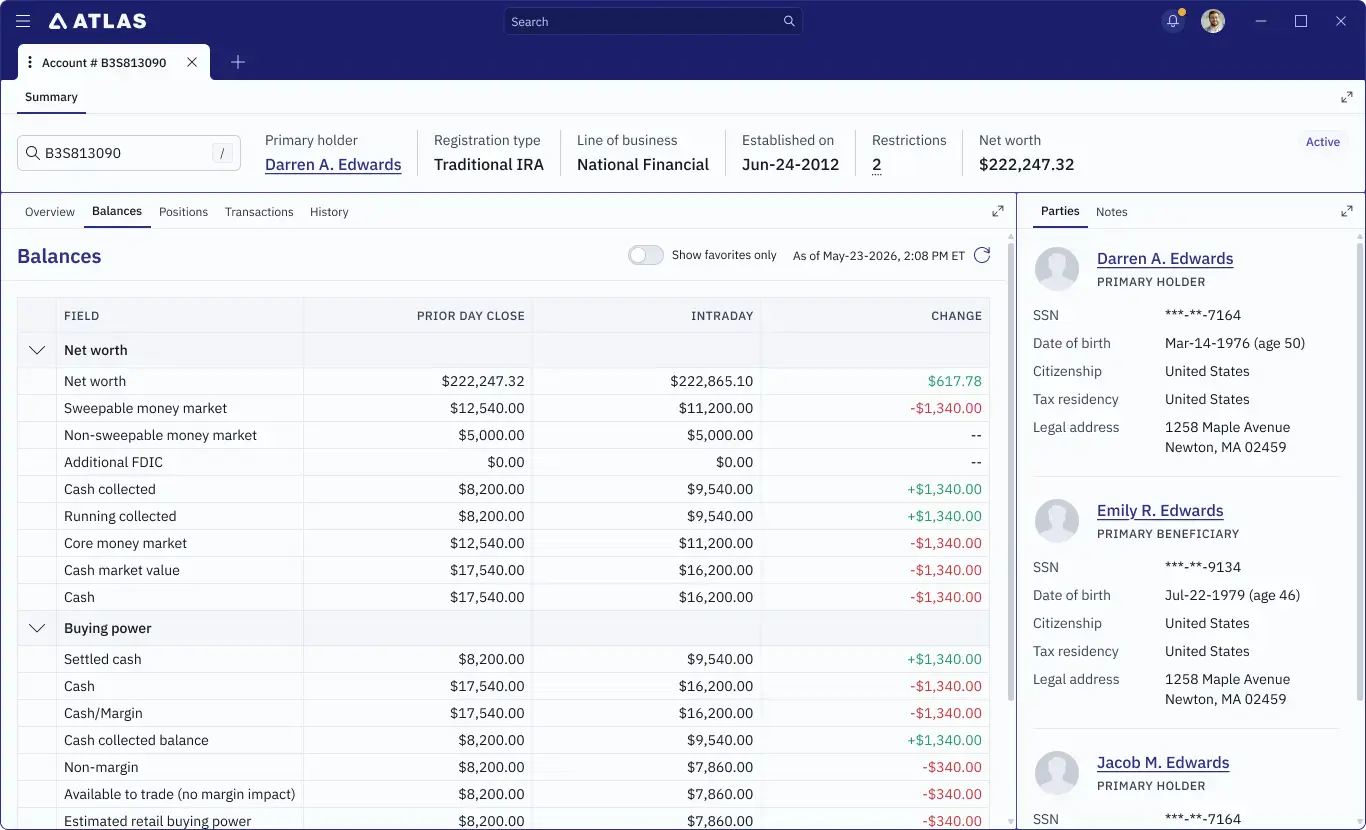
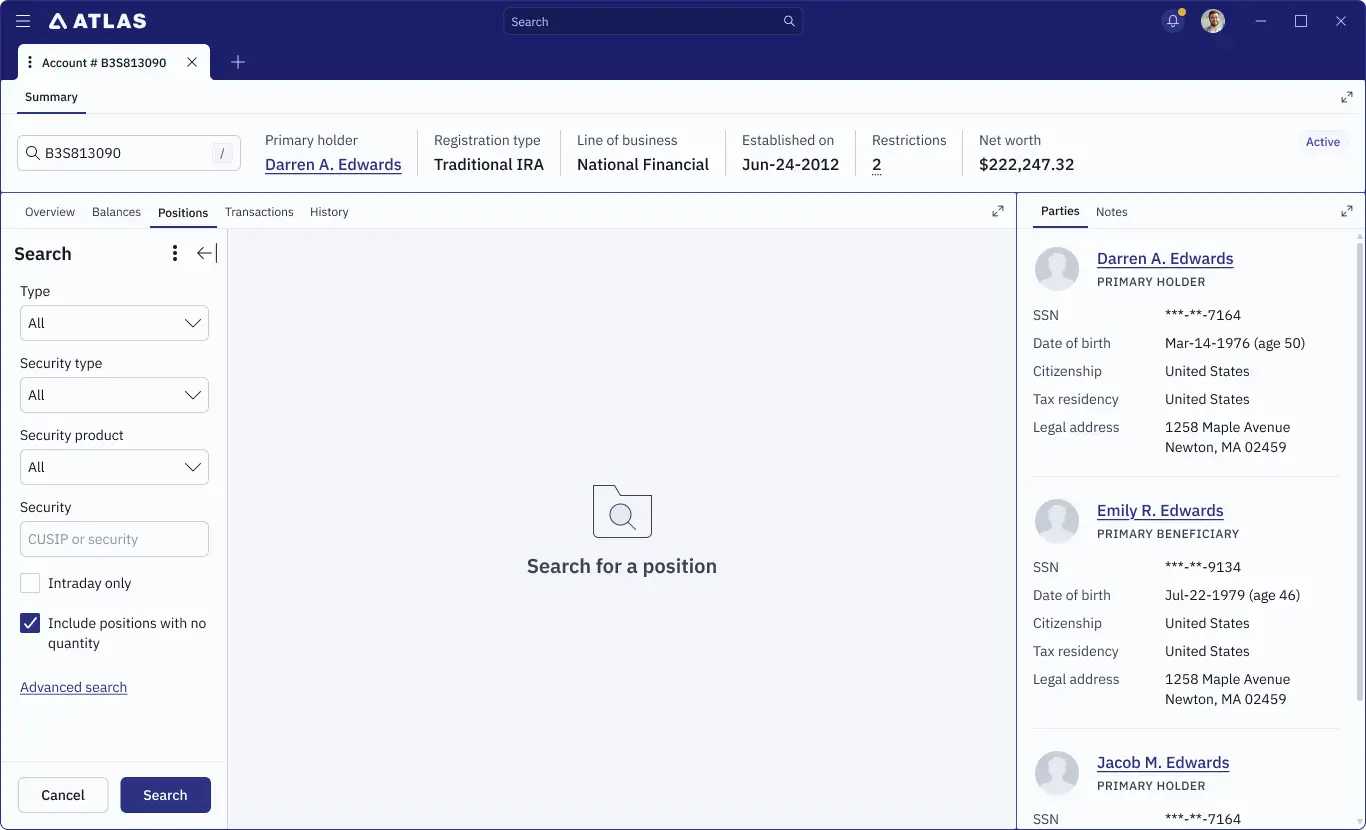
Workflows often required associates to move across multiple systems to complete a single task. Account details, task history, balances, parties, restrictions, notes, and operational status were scattered across different interfaces.
The complexity also affected onboarding. It took associates an average of 18 months to become familiar with the existing tools and workflows, making it difficult for new team members to gain confidence and contribute efficiently.
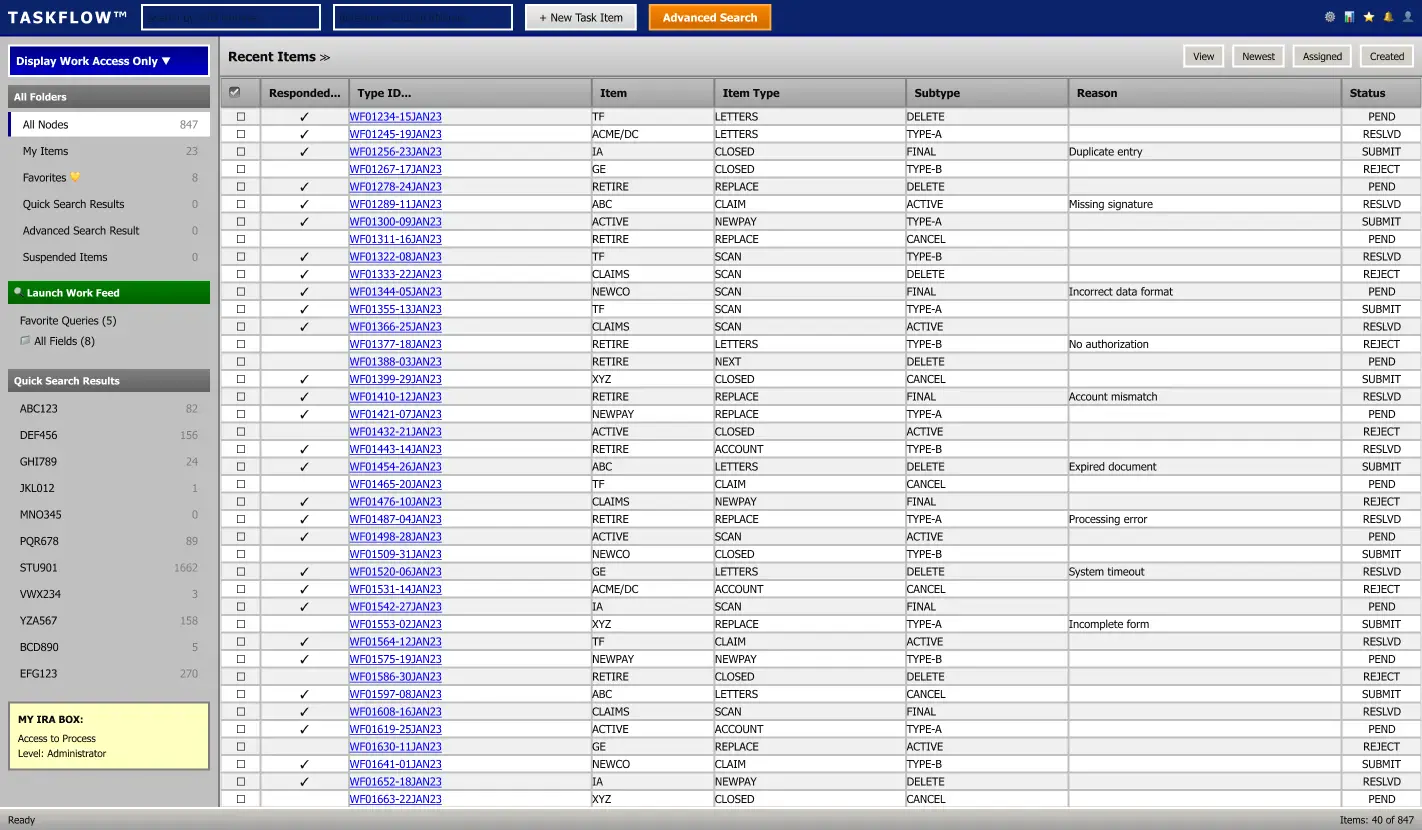
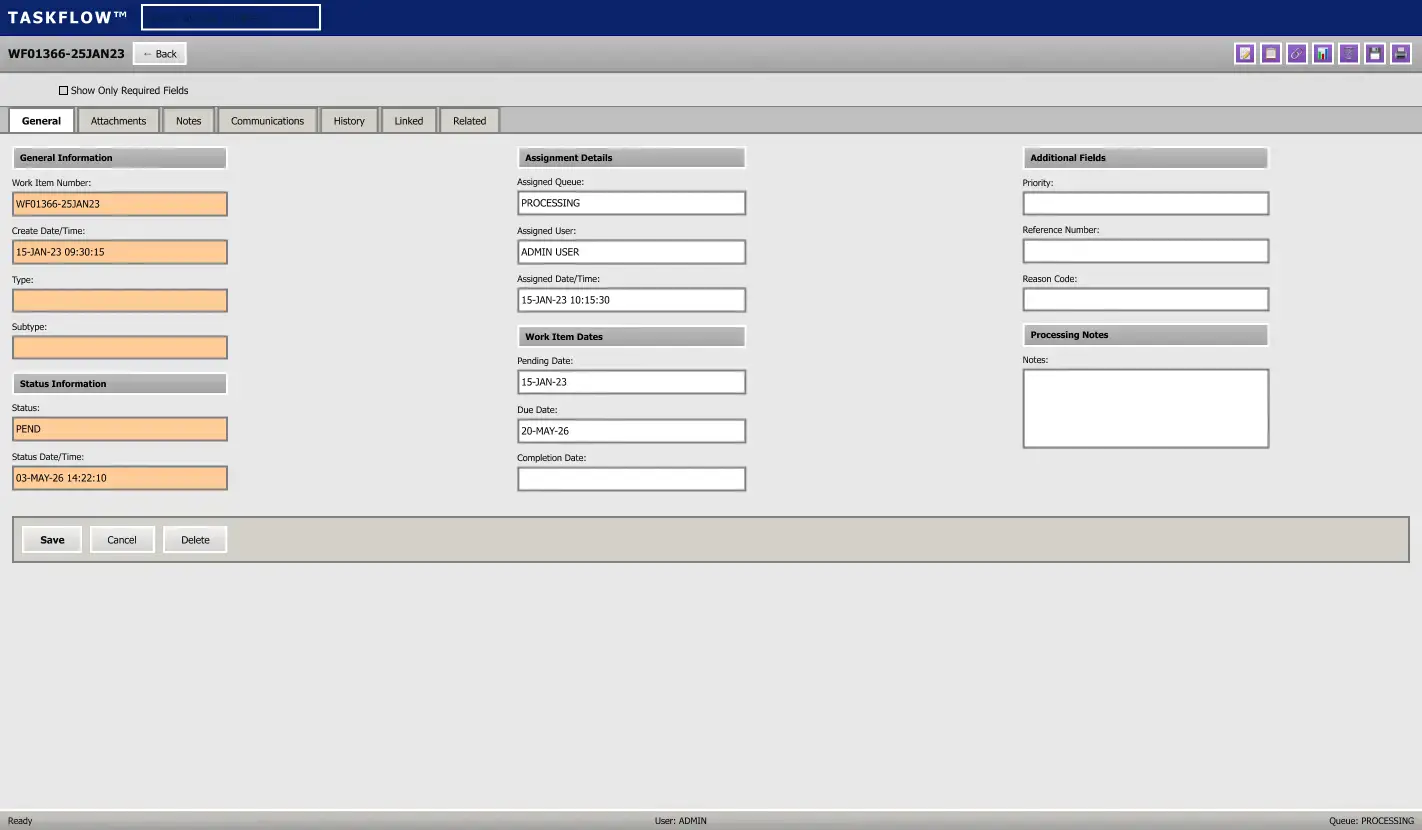
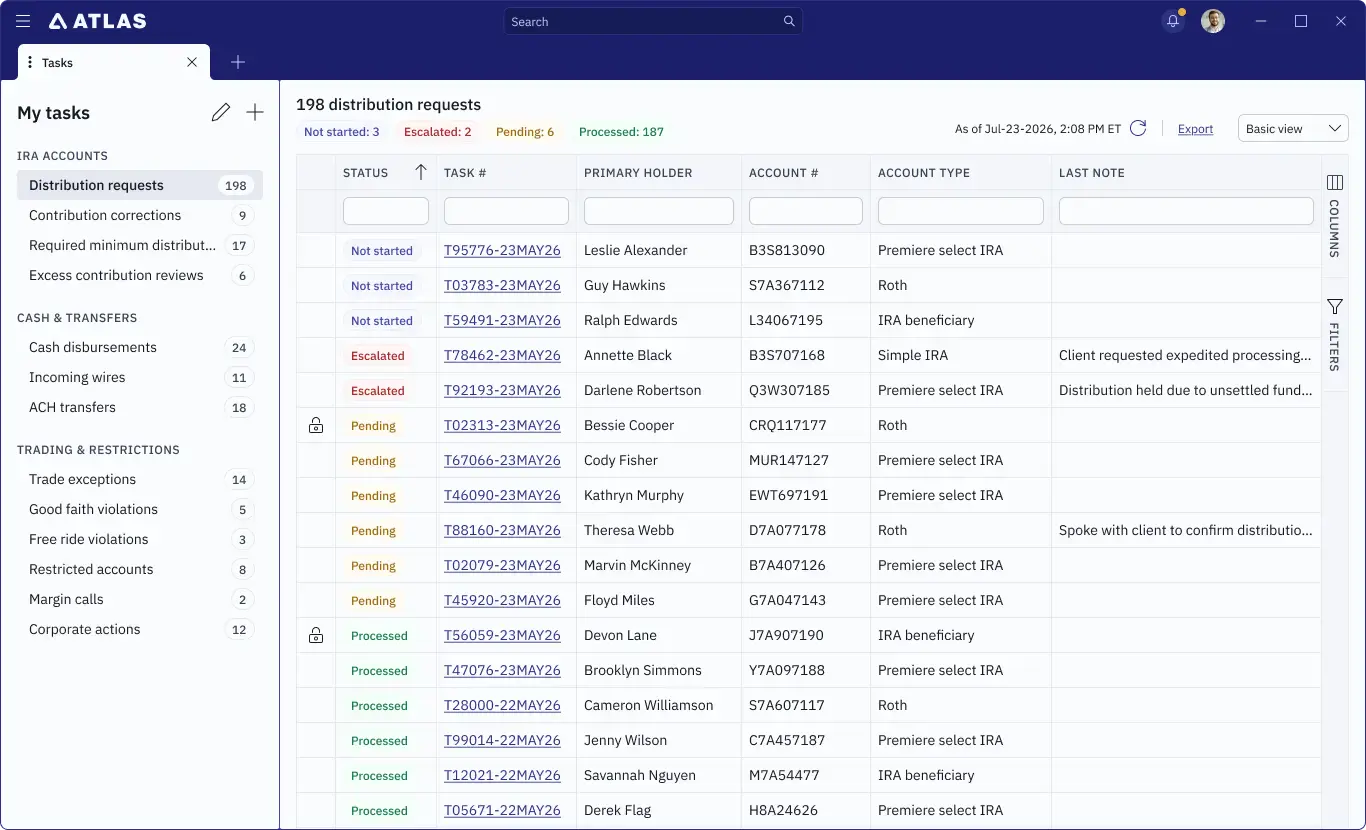
Task assignment was especially challenging. Teams assigned work in different ways based on local processes, institutional knowledge, and inconsistent rules. While most tasks generally fell into a few high-level categories, the nuances in how assignment happened created major complexity for a platform solution, including:
- Manual task assignment was tedious and time consuming.
- Assigning work to broad task lists was often too generic, leading to incorrect routing and reassignment.
- Assigning work by account number was too specific to scale, especially when new accounts were created.
- Time-sensitive tasks could be missed when routed incorrectly.
- Associates lacked a consistent interface for understanding what work needed attention and why.
My role
I led the associate experience end to end for the new financial operations platform.
- Defined the UX vision for the platform.
- Led the end-to-end associate experience across task, account, and operational workflows.
- Spearheaded platform standards for navigation, layout, interaction patterns, components, and data-dense workflows.
- Established consistent design patterns across fragmented legacy capabilities.
- Partnered with product, engineering, operations, and business stakeholders.
- Translated complex financial workflows into scalable platform experiences.
- Explored how intelligent task routing could reduce manual work and improve operational accuracy.
- Extended platform standards to support a scoped, client-facing experience for institutional users.
A major part of my role was not only designing screens, but creating the standards and system-level patterns that would allow the platform to scale across teams and workflows.
Discovery
We met with associates across multiple departments to understand how work was assigned, routed, and completed. Discovery showed that task assignment was rarely based on a single rule. Different teams used different combinations of task and account characteristics, including line of business, branch, task type, task status, account type, transaction amount, department ownership, time sensitivity, account restrictions, and associate expertise.
This revealed that the challenge was not simply creating better task lists. The platform needed a flexible routing model that could account for complex operational logic while still giving associates a simple, predictable way to manage their work.
Platform strategy
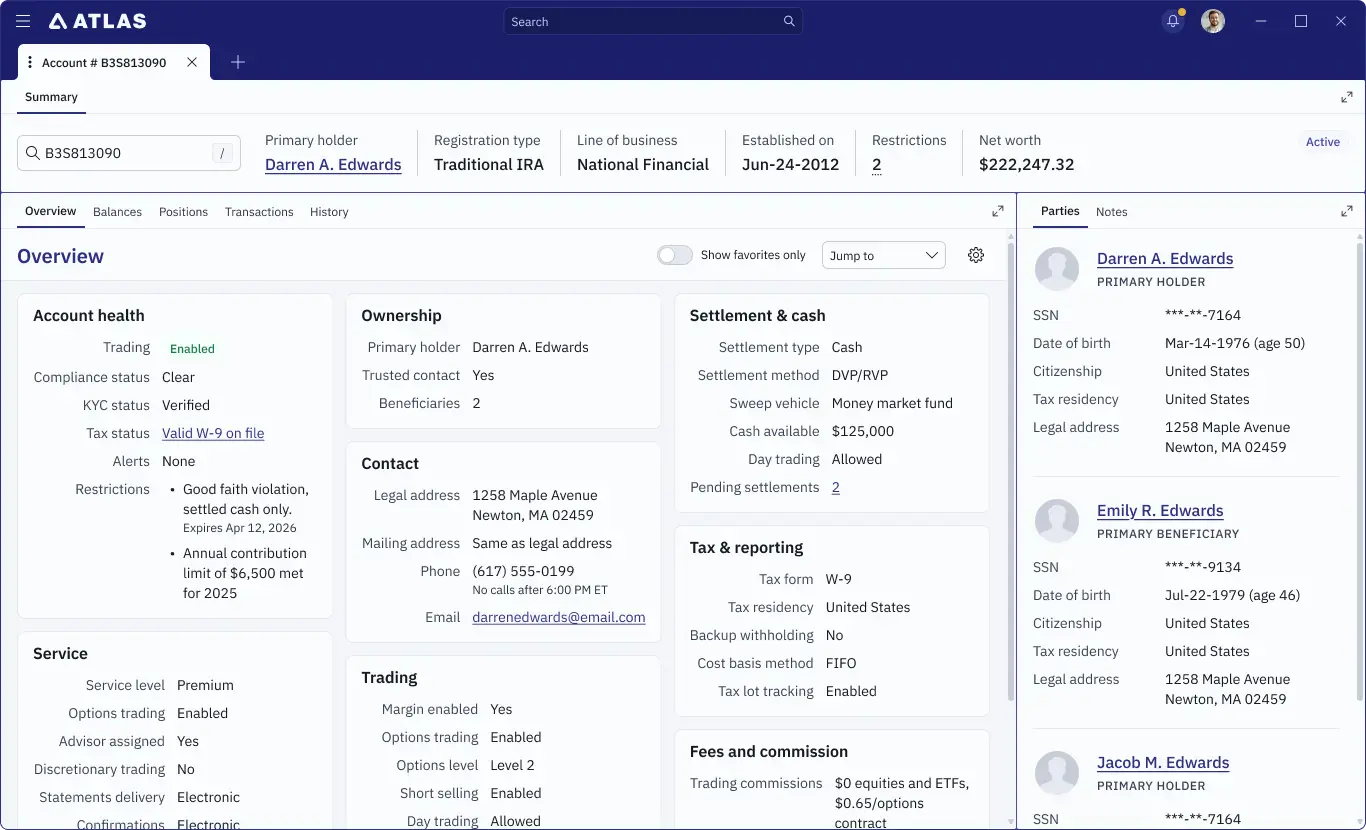
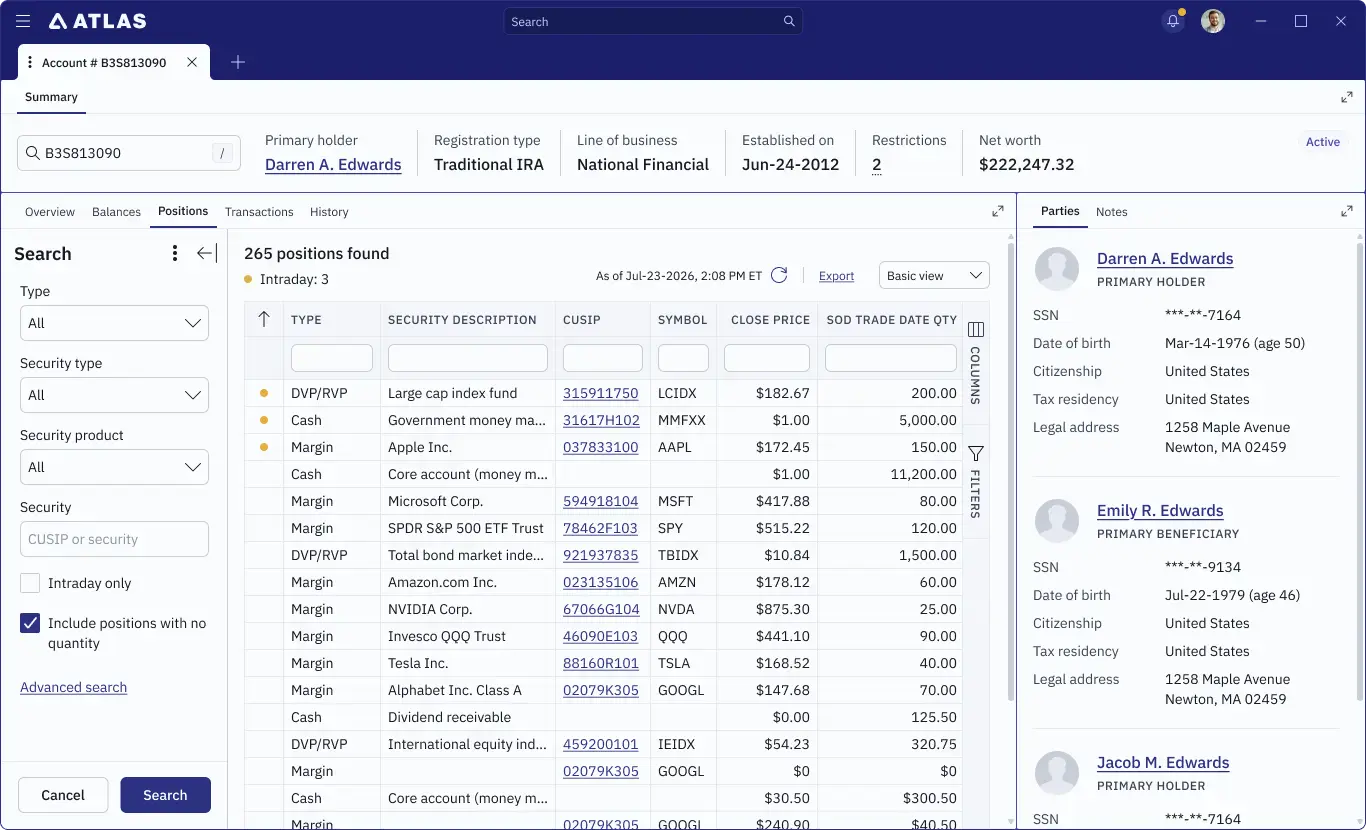
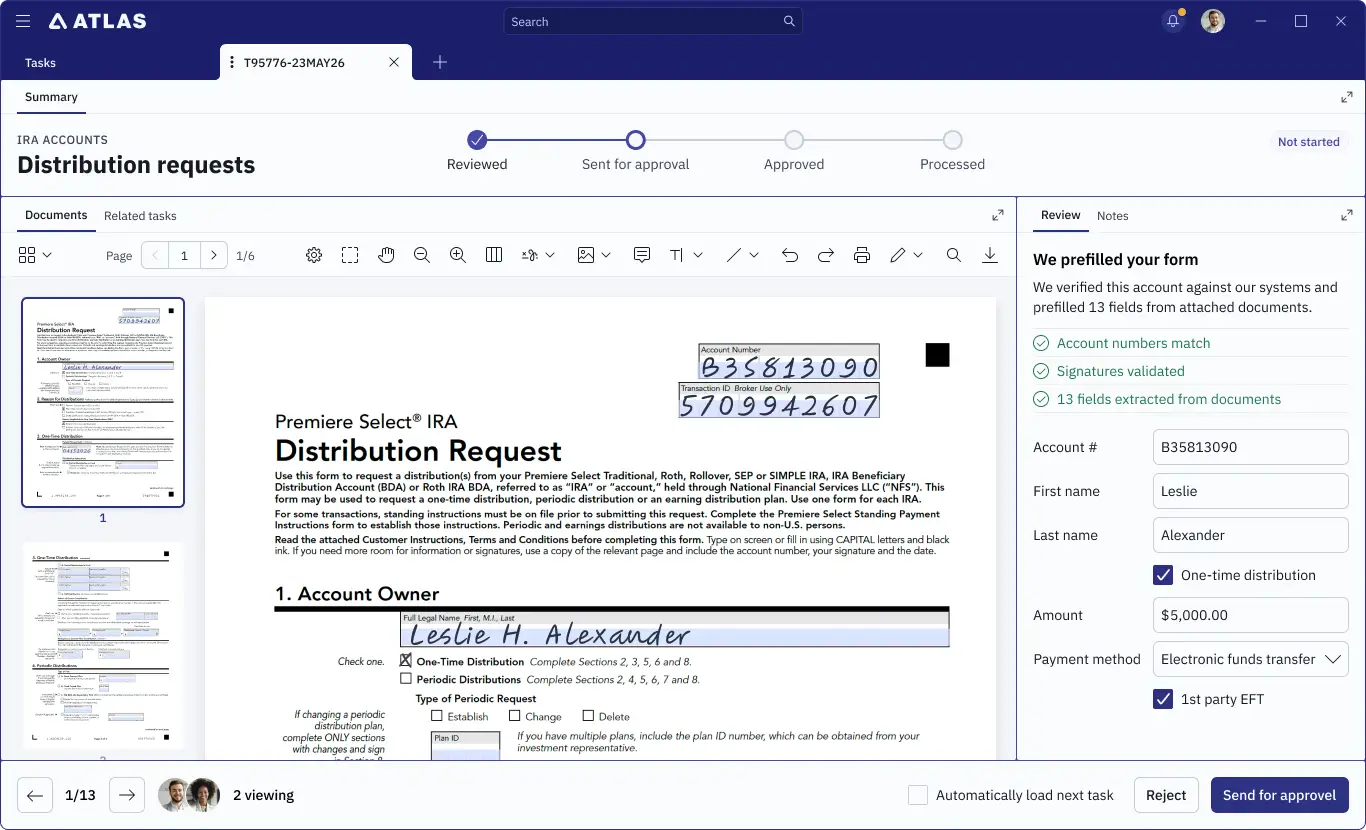
The platform vision centered around creating one consistent place for associates to understand and complete operational work. Instead of forcing users to move between disconnected systems, the experience brought together task queues, account context, customer and party information, balances and positions, notes and history, restrictions, routing recommendations, and operational actions.
The goal was to help associates quickly understand what needed attention, why a task was assigned, what account or customer it related to, whether there were risks or pending items, and what action should happen next.
Because the platform needed to support many workflows, I focused heavily on standards that could scale across teams. This included defining patterns for global navigation, task queues, account summaries, data grids, detail panels, tabs, status indicators, dense forms, read-only data, bulk actions, notes, history, dark mode, accessibility, and keyboard-friendly workflows.
A major opportunity was to use intelligence to route work more accurately. Task assignment often depended on manual review, broad task lists, or overly specific account-based rules. We explored how task and account characteristics could be used to recommend or assign work to the right department based on factors such as task type, account type, line of business, branch, transaction amount, status, required expertise, and existing workload.
This shifted the experience from manual task assignment toward contextual routing, helping reduce reassignment and improve confidence that work was landing in the right place.
Outcomes
The work established a clear UX direction for a unified financial operations platform.
One of the most significant impacts was on associate ramp-up time. By consolidating workflows and introducing more consistent platform patterns, the average time it took associates to become familiar with the tools and workflows was reduced from 18 months to 1 month.
The work also created a scalable associate experience across task and account workflows, a consistent platform framework for fragmented legacy capabilities, standards for dense financial data and operational actions, a more structured model for task routing and prioritization, and a foundation for a cohesive platform that could support many departments and workflows.
The result was a platform vision designed to help associates work faster, reduce operational friction, and manage complex financial tasks with greater confidence.
Reflection
This project reinforced that enterprise UX is often less about isolated screens and more about designing the structure behind the work.
The biggest challenge was not simply modernizing old interfaces. It was understanding how associates made decisions, how work moved across teams, and how platform standards could bring consistency to a complex operational environment.
At this scale, design standards are not just visual guidelines. They directly affect speed, accuracy, trust, and the ability for teams to work across shared systems.